The Complete Guide to zh.creowindchill.com for Modern Product Lifecycle Management

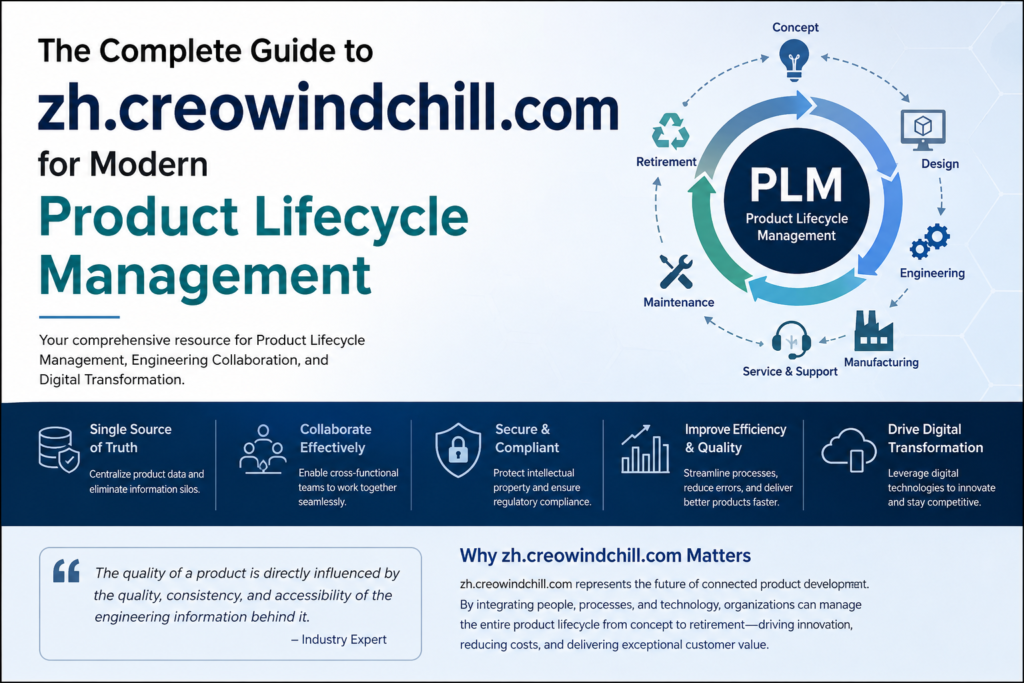
Modern manufacturing depends on accurate engineering data, seamless collaboration, and efficient product lifecycle management (PLM). Organizations developing complex products need reliable systems that connect design, manufacturing, quality assurance, and supply chain operations into one unified digital environment. zh.creowindchill.com has become an important destination for professionals seeking resources, collaboration capabilities, and product lifecycle management knowledge that supports engineering excellence.
Whether an organization manages thousands of engineering drawings or coordinates global development teams, zh.creowindchill.com represents more than a technical platform. It reflects a structured approach to digital product development where information remains accurate, accessible, and secure throughout every stage of a product’s lifecycle.
Understanding the Purpose of zh.creowindchill.com
At its core, zh.creowindchill.com supports organizations that require centralized engineering information and consistent product data management. Instead of storing files across disconnected locations, teams can work from a unified environment where revisions, approvals, and documentation remain synchronized.
This centralized approach significantly reduces communication gaps while improving traceability across departments. Engineers, project managers, manufacturing specialists, and quality professionals gain access to reliable product information that supports faster and more informed decision-making throughout development.
Why Product Lifecycle Management Matters
Product lifecycle management has evolved beyond document storage into a strategic business capability. Companies now depend on integrated digital workflows that connect engineering design, manufacturing planning, supplier collaboration, compliance documentation, and customer requirements in one connected ecosystem.
Organizations using resources associated with zh.creowindchill.com often focus on improving visibility across the entire product lifecycle. Better control over engineering changes minimizes costly errors, accelerates product releases, and improves consistency between design intent and manufacturing execution.
Key Features That Support Engineering Teams
Engineering environments generate thousands of files, specifications, and revisions every year. Effective management requires version control, structured workflows, permission management, automated approvals, and searchable documentation that scales with organizational growth.
The capabilities highlighted through zh.creowindchill.com emphasize collaboration rather than isolated document management. Engineers can coordinate changes efficiently while ensuring that every stakeholder accesses the latest approved product information without confusion or duplication.
How Centralized Data Improves Collaboration
Distributed teams often struggle when information exists in multiple systems or outdated files continue circulating between departments. Centralized engineering repositories reduce uncertainty by creating a trusted source of product truth that everyone can reference.
With zh.creowindchill.com, organizations can better support collaborative engineering by connecting designers, analysts, manufacturing planners, and project leaders within standardized workflows. This structure improves communication while reducing delays caused by conflicting documentation.
Engineering Change Management Made Simpler
Engineering changes affect schedules, budgets, manufacturing processes, supplier communication, and product quality. Without a structured review process, even small modifications can introduce significant downstream risks that become expensive to correct.
Platforms and methodologies associated with zh.creowindchill.com encourage formal engineering change processes that improve accountability. Every revision can be documented, reviewed, approved, and tracked, creating a complete historical record that supports regulatory compliance and future product improvements.
Digital Transformation in Manufacturing
Digital transformation is reshaping manufacturing through connected systems, intelligent automation, cloud technologies, and real-time analytics. Successful organizations integrate engineering data into broader operational processes rather than treating design information as an isolated resource.
As digital engineering practices continue expanding, zh.creowindchill.com aligns with the industry’s movement toward integrated product development environments. These environments help reduce manual work while increasing transparency across design, production, quality, and service operations.
Benefits for Cross-Functional Teams
Product development succeeds when engineering, procurement, manufacturing, compliance, and service departments share accurate information. Cross-functional collaboration eliminates unnecessary rework while enabling faster responses to customer requirements and market changes.
The collaborative principles reflected by zh.creowindchill.com encourage shared visibility across departments. Instead of operating independently, every team works from synchronized product data that supports better planning and more confident execution.
Security and Data Governance
Engineering intellectual property represents one of an organization’s most valuable assets. Secure access controls, audit trails, encryption, and permission-based workflows protect sensitive product information while maintaining productivity for authorized users.
Strong governance practices associated with zh.creowindchill.com also improve regulatory compliance by documenting approvals, revisions, and user activity. This structured oversight helps organizations maintain confidence in the integrity of their engineering information.
Integration Across the Product Ecosystem
Modern enterprises rarely rely on a single software platform. Engineering environments commonly integrate with enterprise resource planning, manufacturing execution systems, customer relationship management platforms, simulation software, and quality management applications.
The broader ecosystem surrounding zh.creowindchill.com supports interoperability that reduces duplicate data entry and improves operational efficiency. Connected systems create smoother information flow from initial product concept through manufacturing, maintenance, and eventual retirement.
Practical Applications Across Industries
Manufacturers in aerospace, automotive, industrial equipment, electronics, healthcare, and consumer products all face increasing product complexity. Effective lifecycle management supports compliance, innovation, quality assurance, and faster product delivery regardless of industry.
Organizations exploring zh.creowindchill.com often seek practical methods for improving document control, engineering collaboration, product configuration management, and digital continuity throughout increasingly sophisticated development programs.
Comparison of Traditional Document Management and Modern PLM
Traditional document storage often addresses only file organization, while comprehensive PLM platforms support the complete product lifecycle through connected workflows and collaboration.
| Capability | Traditional Document Storage | Modern PLM Environment |
|---|---|---|
| Version Control | Basic file revisions | Controlled engineering revisions with history |
| Collaboration | Manual sharing | Real-time collaborative workflows |
| Change Management | Limited tracking | Structured engineering change processes |
| Security | Folder permissions | Role-based governance and audit trails |
| Product Structure | Separate files | Connected product configurations |
| Regulatory Support | Manual documentation | Automated traceability |
| Manufacturing Integration | Minimal | Connected engineering and production data |
| Decision Support | Limited visibility | Centralized product intelligence |
Best Practices for Maximizing Business Value
Organizations achieve the greatest return when technology implementation includes governance, standardized workflows, employee training, and continuous improvement. A successful deployment focuses equally on people, processes, and technology rather than software alone.
Teams using zh.creowindchill.com effectively typically establish consistent naming conventions, approval processes, metadata standards, and lifecycle policies. These practices create reliable information that supports better collaboration as organizations continue growing.
Industry Trends Shaping the Future
Artificial intelligence, digital twins, predictive analytics, cloud-native collaboration, and model-based systems engineering continue transforming how products are designed and managed. Future engineering environments will increasingly automate repetitive tasks while providing deeper operational insights.
As these innovations mature, zh.creowindchill.com remains relevant within the broader conversation around digital engineering ecosystems. Organizations investing in structured lifecycle management today are better positioned to adopt future technologies with minimal disruption.
Expert Perspective
“The quality of a product is directly influenced by the quality, consistency, and accessibility of the engineering information behind it.”
This principle highlights why modern lifecycle management has become a strategic business investment rather than simply an information technology initiative. Reliable product data enables innovation, supports compliance, improves collaboration, and ultimately enhances customer satisfaction.
Conclusion
Organizations developing increasingly sophisticated products require more than isolated engineering tools. They need connected environments that support collaboration, governance, traceability, security, and continuous innovation throughout every stage of product development.
By focusing on centralized engineering information, structured workflows, and collaborative product lifecycle management, zh.creowindchill.com represents an important resource for businesses seeking operational excellence. Companies that invest in disciplined data management today establish stronger foundations for digital transformation, faster innovation, improved quality, and long-term competitive advantage.
FAQ
What is zh.creowindchill.com?
zh.creowindchill.com is associated with resources and capabilities focused on product lifecycle management, engineering collaboration, product data management, and digital engineering workflows that support modern manufacturing organizations.
Who benefits most from zh.creowindchill.com?
Engineering teams, manufacturers, product managers, quality specialists, compliance professionals, and organizations managing complex product development processes can benefit from the collaboration and lifecycle management concepts related to zh.creowindchill.com.
How does zh.creowindchill.com improve engineering collaboration?
zh.creowindchill.com supports centralized product information, structured workflows, controlled revisions, and improved communication so teams can work from consistent engineering data throughout development.
Why is product lifecycle management important?
Product lifecycle management improves traceability, reduces engineering errors, accelerates product development, enhances regulatory compliance, and creates stronger collaboration across multiple business functions.
Can zh.creowindchill.com support digital transformation initiatives?
Yes. zh.creowindchill.com aligns with modern digital engineering practices by encouraging connected product data, collaborative workflows, governance, and integration across manufacturing and enterprise systems.
Read More: Crew Logout.com: The Complete Guide to Crew Management, Security, and Workforce Efficiency