Temporary Identity Certificate: Complete Guide to Purpose, Eligibility, Benefits, and Application Process

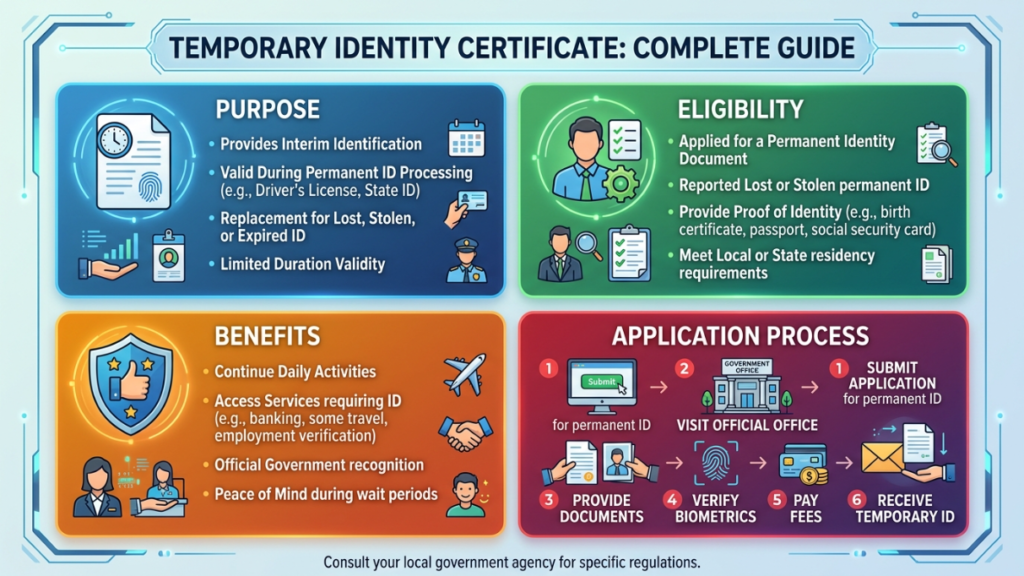
A temporary identity certificate is often the essential bridge between losing access to official identification and regaining full legal recognition. Whether someone has misplaced an identity document, is waiting for a permanent replacement, or requires temporary proof of identity during a government process, this certificate provides an official solution that enables everyday activities to continue with minimal disruption.
Although many people only encounter a temporary identity certificate during unexpected situations, understanding how it works can prevent delays, reduce administrative stress, and ensure compliance with legal requirements. This guide explains the purpose, practical applications, eligibility criteria, benefits, limitations, and best practices for obtaining and using this important document.
What Is a Temporary Identity Certificate?
A temporary identity certificate is an officially issued document that temporarily verifies an individual’s identity while a permanent identification document is unavailable. Government agencies, immigration authorities, civil registration offices, or other authorized institutions typically issue these certificates after verifying the applicant’s identity through available records.
Rather than replacing permanent identification indefinitely, the certificate serves as an interim legal document with a defined validity period. It allows individuals to prove their identity while waiting for a national ID card, passport, residence permit, refugee documentation, or other official credentials to be issued or replaced.
Why a Temporary Identity Certificate Is Issued
Life circumstances can interrupt access to official identification at any time. Lost documents, theft, administrative processing delays, damaged identification cards, or newly approved legal status often create situations where immediate proof of identity is necessary.
A temporary identity certificate helps maintain continuity during these periods. Instead of leaving individuals unable to verify who they are, authorities provide temporary documentation that supports essential transactions while permanent identification is being processed.
Common Situations Where It Is Used
A temporary identity certificate may be issued after reporting a lost or stolen identity document, applying for a replacement national ID, renewing immigration documentation, or completing citizenship procedures. Some jurisdictions also issue temporary certificates after natural disasters that destroy personal records.
The document may also assist people relocating internationally, asylum seekers awaiting final documentation, individuals whose legal names have changed, or citizens experiencing delays in government processing. Exact circumstances vary according to national laws and administrative procedures.
Eligibility Requirements
Eligibility depends on the issuing authority and the legal framework governing identification documents. Most applicants must demonstrate that they previously possessed valid identification or have sufficient evidence establishing their identity through government records or supporting documentation.
Authorities commonly require proof of residence, birth records, previous identity numbers, biometric verification, police reports for stolen documents, or evidence of pending applications. Successful verification ensures the temporary identity certificate maintains credibility and protects against identity fraud.
Required Documents
Applicants are generally asked to provide several supporting documents before approval. These often include passport photographs, proof of address, birth certificates, previous identification copies, application forms, and official reports if documents have been lost or stolen.
Some authorities also request witness statements, biometric information, fingerprints, digital photographs, or confirmation from other government databases. Preparing documentation carefully helps reduce processing delays and increases the likelihood of prompt approval.
Application Process
Although procedures differ between jurisdictions, the application process usually begins by visiting the appropriate government office or submitting an online request where digital services are available. Officials verify submitted documents before determining eligibility for temporary identification.
Once verification is complete, the temporary identity certificate is either printed immediately or issued after a short processing period. Applicants are generally informed about validity dates, permitted uses, renewal options, and any restrictions that apply during the temporary period.
Processing Times and Validity
Processing times vary according to workload, document verification requirements, and administrative resources. Some applicants receive temporary documentation within hours, while others may wait several business days if additional identity verification is required.
Validity periods also differ considerably. Some certificates remain valid for only a few weeks, whereas others continue for several months until permanent identification becomes available or the underlying administrative process is completed.
Benefits of Having a Temporary Identity Certificate
Possessing a temporary identity certificate reduces disruption during periods when permanent identification is unavailable. Individuals can continue interacting with government agencies, employers, healthcare providers, educational institutions, and financial organizations that recognize temporary documentation.
The certificate also minimizes administrative complications by demonstrating that official identity verification has already been completed. This reassurance benefits both the certificate holder and organizations responsible for complying with identity verification regulations.
Limitations You Should Understand
Despite its usefulness, a temporary identity certificate is not universally accepted for every purpose. Certain international travel requirements, banking regulations, licensing authorities, or private organizations may require permanent identification rather than temporary documentation.
The certificate also expires after a specified period. Users must carefully monitor expiration dates and complete the permanent identification process before validity ends to avoid interruptions in legal or administrative activities.
Comparison Between Temporary and Permanent Identification
The following comparison highlights the key differences between temporary documentation and permanent identity credentials.
| Feature | Temporary Identity Certificate | Permanent Identification |
|---|---|---|
| Primary Purpose | Interim identity verification | Long-term legal identification |
| Validity | Limited duration | Multi-year validity |
| Issuing Circumstances | Pending replacement or processing | Completed registration |
| Accepted Uses | Selected official purposes | Broad legal acceptance |
| Renewal | Usually not intended for repeated renewal | Standard renewal cycles |
| Security Features | Basic verification features | Advanced security technology |
| International Acceptance | Limited | Widely recognized where applicable |
Understanding these differences helps applicants use each document appropriately while avoiding unnecessary complications during official transactions.
Where the Certificate May Be Accepted
Acceptance depends on institutional policies and applicable regulations. Government offices commonly recognize temporary documentation during ongoing administrative procedures, particularly when they issued the certificate themselves.
Healthcare providers, educational institutions, employers, insurance organizations, and certain financial institutions may also accept a temporary identity certificate after verifying additional information. Applicants should always confirm acceptance before attending important appointments.
Preventing Delays During the Application
Preparation significantly improves the overall experience. Applicants should verify document requirements in advance, ensure personal information is consistent across supporting records, and keep photocopies or digital backups whenever possible.
Responding promptly to requests for additional documentation also helps prevent extended processing periods. Maintaining communication with the issuing authority ensures applicants remain informed about application progress and expected completion dates.
Identity Security and Fraud Prevention
Modern identity systems emphasize security throughout every stage of document issuance. Verification procedures often combine digital databases, biometric confirmation, document authentication, and cross-agency information sharing to reduce fraudulent applications.
Applicants also play an important role by reporting lost identification immediately, protecting personal information, and avoiding unofficial intermediaries that promise faster processing through unauthorized means. Strong identity management benefits both individuals and public institutions.
Common Misconceptions
Many people mistakenly believe a temporary identity certificate automatically grants every privilege associated with permanent identification. In reality, permitted uses depend on applicable regulations and the policies of individual organizations.
Another misconception is that temporary certificates eliminate the need to complete permanent registration. They are designed as interim solutions rather than permanent alternatives, making timely replacement of official identification an essential responsibility.
Practical Example
Imagine a traveler whose national identity card is stolen shortly before completing an important property transaction. After reporting the theft and verifying personal records, the relevant authority issues a temporary identity certificate while the replacement card is being produced.
The certificate allows the individual to complete authorized administrative tasks, verify identity during scheduled appointments, and continue essential activities until the permanent identification arrives. Without temporary documentation, even routine legal processes could experience significant delays.
Future Trends in Digital Identity
Digital identity ecosystems are rapidly changing how governments verify individuals. Increasingly, temporary documentation is being integrated with secure online verification systems, encrypted databases, and mobile identity platforms that improve convenience without compromising security.
As digital transformation continues, temporary identity certificate processes are likely to become faster, more secure, and increasingly interoperable across government agencies. These developments may reduce waiting periods while strengthening identity protection for citizens and residents alike.
Expert Perspective
“Identity is more than documentation—it is the foundation of access to rights, services, and participation in society. Temporary identification ensures continuity when permanent credentials are temporarily unavailable.”
This perspective highlights why temporary identity solutions remain an essential component of modern administrative systems. They preserve trust while balancing accessibility with strong verification standards.
Conclusion
A temporary identity certificate provides a reliable legal mechanism for proving identity during periods when permanent documentation cannot be used. Whether replacing lost documents, completing immigration procedures, or waiting for newly issued credentials, the certificate helps individuals maintain access to essential services while official processes continue.
Understanding eligibility requirements, preparing supporting documents carefully, respecting validity periods, and recognizing the certificate’s limitations enables applicants to navigate identity-related challenges with confidence. While temporary by design, its role in maintaining legal continuity is both practical and indispensable.
FAQ
What is a temporary identity certificate used for?
A temporary identity certificate provides official proof of identity while permanent identification is unavailable due to replacement, renewal, or administrative processing.
Who can apply for a temporary identity certificate?
Eligibility varies by jurisdiction, but applicants generally must demonstrate their identity through existing government records or supporting documentation before receiving a temporary identity certificate.
How long is a temporary identity certificate valid?
The validity period depends on the issuing authority and the reason for issuance. Many certificates remain valid for several weeks or months until permanent identification is available.
Can I travel internationally with a temporary identity certificate?
In most cases, a temporary identity certificate is not intended to replace passports or other internationally recognized travel documents. Travelers should confirm requirements with relevant authorities before making arrangements.
What happens if my temporary identity certificate expires?
If the temporary identity certificate expires before permanent identification is issued, applicants should immediately contact the issuing authority to determine available options and avoid interruptions in identity verification.
Is a temporary identity certificate accepted by banks?
Some financial institutions accept a temporary identity certificate, while others require permanent identification or supplementary verification. Policies differ depending on local regulations and institutional requirements.
Read More: Writing Camping: The Complete Guide to Finding Inspiration in the Outdoors