
Hot Water Bread: The Complete Guide to Soft Texture, Rich Flavor, and Foolproof Baking Success

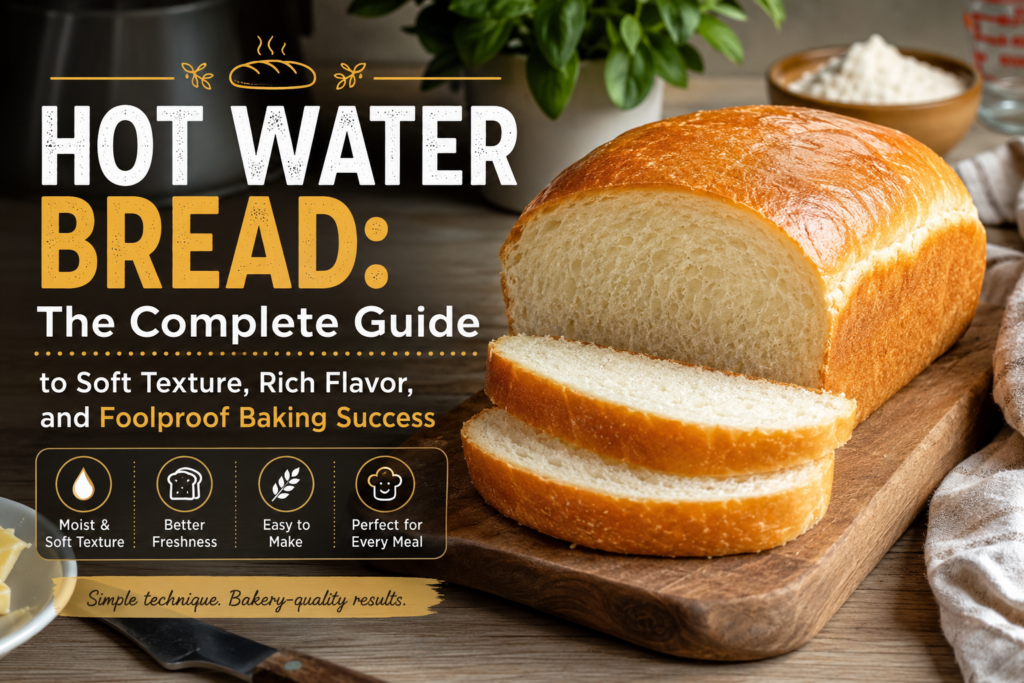
Bread baking often feels like a balance between science and tradition, but hot water bread proves that a simple technique can produce consistently impressive results. By using hot water to hydrate part of the flour, this traditional method creates a dough that is exceptionally soft, easy to work with, and capable of producing a tender crumb with excellent moisture retention.
Whether you are an experienced home baker or trying homemade bread for the first time, understanding hot water bread opens the door to better texture, improved freshness, and reliable baking results. This guide explains how the method works, why it remains popular, and how you can achieve bakery-quality loaves in your own kitchen.
What Is Hot Water Bread?
Hot water bread is a style of bread made by combining flour with hot or near-boiling water before the remaining ingredients are added. This partial gelatinization of the starch changes how the dough absorbs moisture, resulting in a softer and more pliable texture than many conventional bread recipes.
The technique has appeared in many regional baking traditions because it requires no specialized equipment while delivering dependable results. Today, bakers continue to appreciate it for creating sandwich loaves, dinner rolls, and homemade bread that remain fresh for longer.
Why Hot Water Changes the Dough
When hot water contacts flour, some of the starch granules begin absorbing water immediately and swell more effectively than they would with cool water. This process improves hydration throughout the dough and creates a smoother, more elastic consistency that is easier to knead.
The improved moisture retention also benefits the finished loaf. Instead of drying quickly after baking, the bread often stays soft for several days, making hot water bread a practical choice for busy households and meal preparation.
The Benefits of Baking Hot Water Bread
Many bakers notice the difference as soon as they begin shaping the dough. The surface feels smoother, stretches more evenly, and is less likely to tear during handling. These qualities simplify the entire baking process while improving consistency from batch to batch.
Finished loaves typically feature a tender crumb, a delicate crust, and excellent slicing characteristics. These advantages make hot water bread especially suitable for sandwiches, toast, dinner rolls, breakfast breads, and everyday family meals.
Essential Ingredients for Excellent Results
Although the technique differs from standard recipes, the ingredients remain familiar. Bread flour or all-purpose flour forms the foundation, while yeast provides fermentation, salt enhances flavor, sugar supports browning and yeast activity, and butter or oil contributes richness and softness.
The quality of each ingredient matters. Fresh yeast, high-quality flour, clean water, and accurate measurements work together to maximize the advantages that hot water bread naturally provides throughout the baking process.
Comparing Hot Water Bread With Traditional Bread
The following comparison highlights the practical differences between these two baking approaches.
| Feature | Hot Water Bread | Traditional Bread |
|---|---|---|
| Initial hydration | Uses hot water to partially gelatinize starch | Uses cool or lukewarm water |
| Dough texture | Soft, smooth, and highly elastic | Firmer before kneading |
| Moisture retention | Excellent | Moderate |
| Crumb structure | Tender and uniform | Can vary significantly |
| Freshness | Remains soft longer | May stale more quickly |
| Beginner friendliness | Very forgiving | Depends on recipe |
| Best uses | Sandwiches, rolls, toast | Wide variety of artisan breads |
This comparison illustrates why many home bakers adopt the technique after trying it once. While artisan breads often emphasize chewy crusts and open crumb structures, hot water bread focuses on softness, consistency, and everyday versatility.
Step-by-Step Baking Process
The process begins by pouring hot water over a portion of the flour and mixing until a smooth paste or soft mixture forms. After allowing it to cool slightly, yeast, remaining flour, salt, and other ingredients are incorporated before kneading develops gluten strength.
Following fermentation, the dough is shaped, proofed until properly risen, and baked until golden brown. Careful attention to proofing time often determines whether the final loaf achieves maximum volume and a beautifully balanced texture.
Common Mistakes and How to Avoid Them
One frequent mistake is using water that is excessively hot when adding yeast directly. High temperatures can weaken or destroy yeast activity, reducing rise and creating dense bread. Allowing the mixture to cool before introducing yeast solves this issue.
Another common problem is adding too much flour during kneading. Because hot water bread naturally contains higher hydration, the dough may initially feel softer than expected. Resisting the urge to over-flour the dough usually produces a lighter, softer loaf.
Flavor Variations and Creative Ideas
The neutral flavor profile makes this bread an excellent foundation for customization. Herbs, roasted garlic, shredded cheese, seeds, honey, cinnamon, dried fruit, or whole grains can all be incorporated without compromising the dough’s pleasant texture.
Many bakers also experiment with different fats or sweeteners to adjust richness and flavor. These small changes allow hot water bread to transition seamlessly from breakfast toast to artisan-style dinner bread while maintaining its signature softness.
Storage, Freshness, and Freezing Tips
Once completely cooled, bread should be stored in a sealed bread bag or airtight container at room temperature. Proper storage helps preserve moisture while preventing unnecessary drying, allowing each slice to remain soft and flavorful.
For longer storage, freezing works exceptionally well. Wrapping individual portions tightly before freezing allows quick thawing whenever needed, making hot water bread an ideal option for meal planning and reducing food waste.
Practical Uses in Everyday Cooking
Soft texture and reliable slicing make this bread suitable for nearly every meal. It performs beautifully in sandwiches, grilled cheese, French toast, garlic bread, breakfast toast, bread pudding, and homemade stuffing.
Families also appreciate its versatility because one loaf serves multiple purposes throughout the week. From school lunches to weekend brunches, hot water bread adapts effortlessly to changing menus without sacrificing quality.
Baking Tips From Experienced Home Bakers
Small details often separate good bread from exceptional bread. Measuring ingredients accurately, allowing sufficient proofing time, monitoring dough temperature, and avoiding excessive flour during kneading all contribute to consistently superior results.
As legendary baker Julia Child famously said, “The more you know, the more you can create.” That philosophy perfectly reflects bread making, where understanding each technique—including hot water bread—leads to greater confidence and consistently better loaves.
Why Hot Water Bread Remains Popular Today
Modern home baking increasingly emphasizes dependable methods that produce excellent results without unnecessary complexity. This technique aligns perfectly with that goal by combining traditional knowledge with practical simplicity and repeatable outcomes.
Its ability to produce consistently soft, flavorful bread explains why hot water bread continues to attract new generations of bakers. Rather than replacing traditional artisan methods, it offers another valuable approach that suits everyday baking exceptionally well.
Conclusion
Baking great bread does not always require advanced equipment or years of experience. The principles behind hot water bread demonstrate how one thoughtful adjustment in the mixing process can dramatically improve softness, moisture retention, and overall baking success.
Whether you bake occasionally or every week, mastering this technique provides long-term value. From its forgiving dough to its tender crumb and impressive freshness, hot water bread deserves a place among the most practical and rewarding homemade bread methods available today.
FAQ
What is hot water bread?
Hot water bread is bread made by mixing flour with hot water before completing the dough, creating improved hydration, a softer crumb, and better moisture retention.
Why is hot water used instead of cold water?
Hot water partially gelatinizes starch in the flour, helping the dough absorb more moisture and resulting in softer, longer-lasting bread.
Is hot water bread suitable for beginners?
Yes. Hot water bread is often easier to handle because the dough becomes smoother and more forgiving, making it an excellent choice for new bakers.
Can I freeze hot water bread?
Absolutely. Once cooled completely, hot water bread freezes very well and maintains much of its original texture after thawing.
What flour works best for hot water bread?
Bread flour produces a slightly chewier loaf with stronger structure, while all-purpose flour creates a softer texture. Both perform well depending on personal preference.
Read More: Chapter 4 Review Geometry Answers: The Complete Study Guide to Improve Accuracy and Confidence